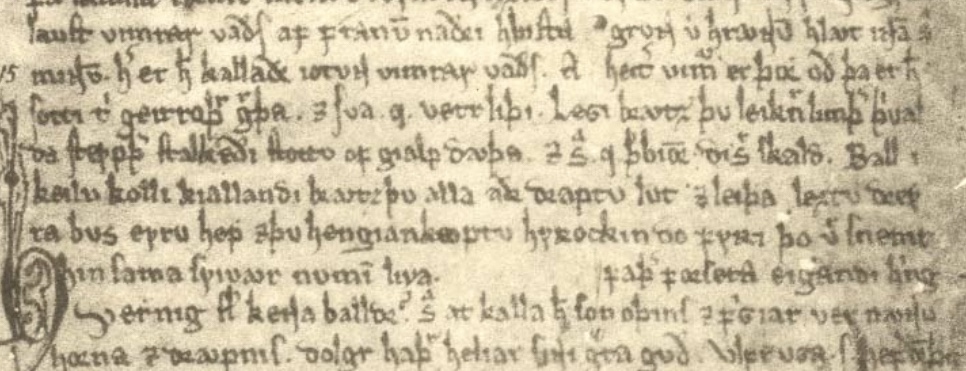
The second installment of my skaldic commentary concerns a short verse by the poet Vetrliði Sumarliðason, an Icelandic poet from the 10th century. The verse details more beings that Thor is responsible for destroying. The verse is as follows:
“Leggi brauztu Leiknar, lamðir Þrívalda, steypðir Starkeði, stett of Gjálp dauða.”
Leggi brauztu Leiknar —
The first being in this poem is the giantess Leikn. Thor is denoted as breaking her legs.
She is noted in Óláfsdrápa and Háttalykill as having an styggvan ljótvaxinn hest or leiknar ljóthrǫmmuðustum sóta, an ugly, untamed and misshapen horse which is analogous to the Helhest of Danish folklore. She likewise has associations with haukum Leiknar odda, dealthy ravens and is said to be a kveldriða, a night-rider or a witch in Knútsdrápa.
The Swedish author Viktor Rydberg in his Undersökningar i germanisk mythologi identifies Leikn as a byname of the giantess Hel. Leikn is denoted as having kinship with Loki in Ynglinga saga in the sequence loka mær of leikinn hefr, which connects Hel with the function of causing leikinn, or madness.
This tale of Thor breaking her legs is not recorded, but after her birth she was thrown into Niflheim by Odin in Gylfaginning. Thor is likewise said in Gylfaginning to be able to cast, or rather strike people into Hel and into Niflhel, as he did with the giant smith who built the walls of Ásgarðr. With the pagan content of this poem, it can be reckoned that there was an alternate narrative where Thor threw, or struck Hel into the underworld resulting in her broken legs, or another tale altogether concerning Thor and Hel.
Thor breaking the legs of Hel hearken back to his mentions as having function over life and death as shown in Gylfaginning when he brings his goat-steeds back from the dead with his hammer, and in Lapponia by Johannes Schefferus, he is said to have control over valetudinem hominum, vitam, mortem, & id genus or the health of men, life, death and the like, as the Sami believed.
Thor breaking the legs of Hel, shows his inherent might, having the power over life and death — standing up to death herself and casting her down.
lamðir Þrívalda —
The next being in this poem is an enigmatic giant by the name of Þrívaldi. Thor is said to have lamed or thrashed him.
The conventional definition of his name is “the thrice-mighty”. Upon further investigation of the manuscripts he is recorded in, there are significant variations of his name, as we can see from the Jǫtna heiti section of Skáldskaparmál. In Codex Trajectinus he is recorded as Þrívaldi, in Codex Regius he is Þvivaldi, AM 748 II 4to (C) he is called Þrífalldi, and another similar variation exists in AM 748 Ib 4to (B) as Þrifalldi.
We could easily chalk it up to a spelling error but that would be a little reductive. Looking at this particular spelling, we find a compound name with combines the words Þrífa, meaning to clutch, seize or grab ahold of suddenly or violently and alda, which means a rolling wave. This gives this being an association with the sea, with the meaning of his name being “the seizing wave”.
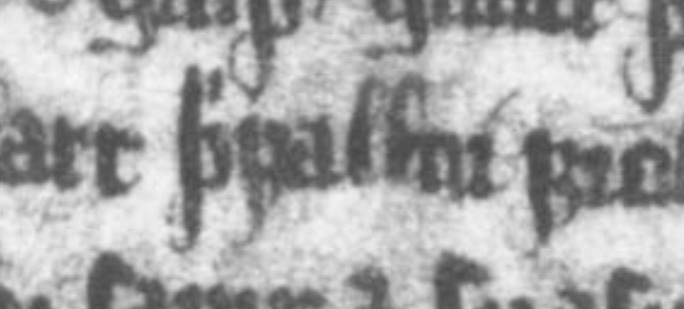
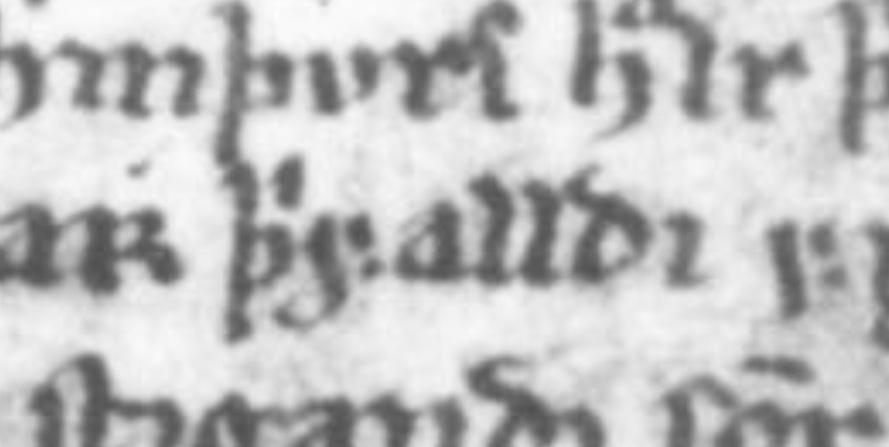
Now, we shouldn’t be too careful to dismiss the standard meaning of his name, as this being certainly was a strong enemy of Thor. What we can ascertain from the differences in spelling is added elements to his nature. I would personally define the Þrívaldi-Þrífaldi as “the thrice-mighty seizing waves/sea”.
Thor has a common motif of conquering destructive beings of the sea, and in association with this giant he is said to be the vegandi Þrívalda, the slayer of Þrívaldi and sundrkljúfr níu höfða Þrívalda — the sunder-cleaver of the nine heads of Þrívaldi in Skáldskaparmál. The motif of the number nine in relation to the waves here is repeated in the nine daughters of Ægir-Gymir and Rán, who are beings associated with the waves. The happenings of this specific tale are not recorded, but it was noteworthy based on the multiple mentions of it.
Thor conquering Þrívaldi-Þrífaldi, shows his strength and ability to suppress the chaotic waters that would otherwise seize sailors and fishermen, crushing them under the weight of his waves.
steypðir Starkeði —
The next being mentioned is the mighty giant, or half-giant hero Starkaðr. His mythos has a few variations.
The Gesta Danorum by Saxo Grammaticus gives the most detailed account of the deeds of Starkaðr. Saxo gives the hero Starkaðr eight arms, which Thor was said to have ripped off, leaving him with only two arms. This narrative is contrasted with the one in Gautreks saga, which depicts Starkaðr being descended from a mighty giant from the north of Norway called Starkaðar Áludrengs, who was descended from the jötnar, a destructive race of primordial beings and had eight arms. Starkaðar Áludrengs becomes the father of Stórvirkr, who then is father to the legendary warrior, Starkaðr inn gamli.
In Gautreks saga, Starkaðr Áludrengs abuducted Álfhildr the daughter of the king of Álfheimr during a dísablót. The king called upon Thor, who subsequently killed Starkaðr. When Álfhildr returned home, she was pregnant with Stórvirkr, who eventually became the father of the later hero Starkaðr, who is hated and given seven distinct dooms by Thor while simultaneously is blessed by Odin.
Whether or not which narrative is more accurate is irrelevant, as the different variations all descend from a singular tale in which Thor battles a destructive being by this name and subdues him.
The etymology of his name has been said to derive from the compound containing sterkr, meaning stark or strong, and höðr, meaning war or slaughter. His name would then mean the “the strong slaughterer”, and his primary attribute revolves around wanton destruction of war, which we can see from the stories of the many battles he participates in.
If we look at the fundamental tales of Thor, he is not a war god, but his capacity for great violence lies in the eradication of the untamed, destructive beings that would cause harm to the world of the Gods and the world of men. In many of his tales, he is seen as wandering out into the wilds just to hunt these beings and destroy them whenever possible.
Thor is said to have steypðir, that is, he is said to have cast down, and overthrowing Starkaðr. By this action, Thor defends against the destruction of war and secures the world of the Gods and men.
stett of Gjálp dauða —
The next being mentioned is Gjálp, the daughter of Geirröðr. She is mentioned in Þórsdrápa and in Skáldskaparmál alongside her sister Greip.
The first encounter that Thor has with her, is when he is is crossing the river Vimur, the greatest of all rivers. As he enters the river, the water rises to his shoulders and he commands the river to not rise, but he sees that Gjálp is standing astride the river causing it to rise. Thor grabs a large rock, and says “a river must be stemmed at its source” as he throws it, and the flooding of the river stopped. This has been noted by scholars to hold some perverse humor, as it implies that Gjálp is pissing in the river, causing it to rise. The tale says that he did not miss his mark.
Later in the tale he enters the mountain hall of Geirröðr, and was given a guest lodging to stay in. He sits down on the chair and feels the chair moving upwards, and he takes his staff Gríðarvölr and pushes it to the ceiling and presses as hard as he can downwards. There was a crack and a scream, and that was the end of Gjálp and Greip. He had broken their backs.
The details of the story aside, the etymology of her name shows yet again the motif of Thor interacting with destructive beings of the sea, and water generally. The term gjálpa literally means to yelp, or to scream. It also has a connotation of yapping, or chattering. The other recorded variations such as Codex Wormianus and Codex Upsaliensis have the word gialf as her name. This translates to gjálf or gjálfr, which means the din, or roar of the sea, and also the swell of the waves.
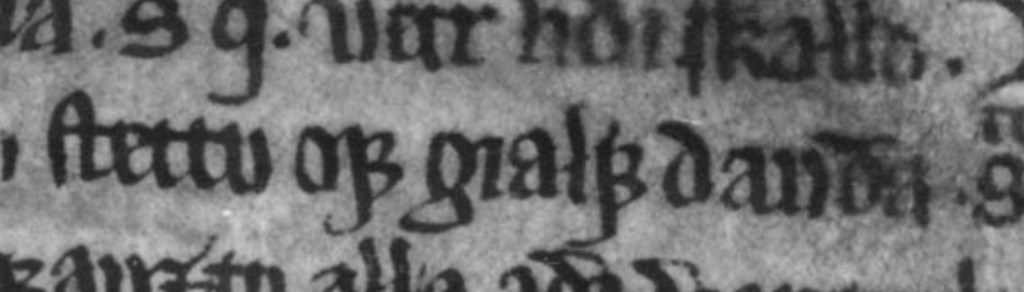
Thor defeating Gjálp, means that he conquers the destructive spirit of the roar of the sea and the rivers, breaking her back and stopping her torrential flow which causes the rivers to flood.
 Þórr siðr