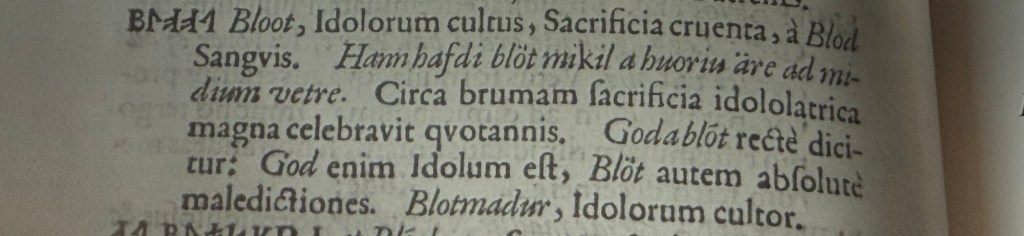
Specimen Lexici Runici is the first dictionary of Old Norse or Old Icelandic, being compiled by Magnús Ólafsson of Laufás in 1650. We can see here that the term blót even at a late stage, was distinctly associated with blood (à Blod sanguis) and blood sacrifice (sacrificia cruenta).
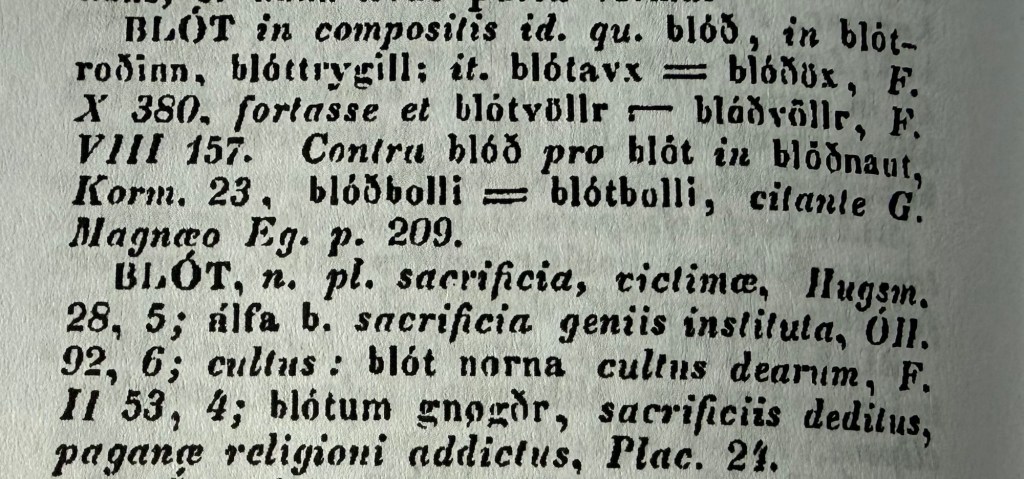
Lexicon Poeticum from 1860 gives the same context:
Blót in compositis id. qu. blóð (…)
“Blót in compounds (means) the same as blóð.”
Contra blóð pro blót in blóðnaut (…)
“Conversely, blóð (is used) in place of blót in blóðnaut.”
So yes, this means that blót requires blood for it to be considered a blót. It is not a general sense of worship, but rather worship by blood sacrifice, as we see time and time again throughout the sagas.
As we see in Hákonar saga góða, blót was considered to fylla svá en fornu lǫg (to fulfil the ancient laws). By consistently enacting them according to the dictates and strictures of custom, árs ok friðar (abundance and peace) was secured for the people. The refusal to blót properly according to custom was rangan átrúnaðr (wrong belief), as we see from Kjalnesinga saga, and was punishable legally.
Some adaptation in religion is natural and even inevitable, but when the core foundations are so altered that they forgo the original essence, this borders on revisionism. Worse yet, it is hubris to consider that we as men may change the laws of the gods.
 Þórr siðr